Children require special medical attention because their immune systems are still developing. Proper child health care Guide helps ensure healthy growth, strong immunity, and protection from common illnesses. Parents often worry when their child becomes sick, but understanding common childhood diseases and how to prevent them can make a big difference.
At Chetana Hospital, our paediatric team focuses on preventive care, early diagnosis, and effective treatment so that every child can grow healthy and strong.
Why Child Health Care Is Important
A child’s early years are critical for physical and mental development. Regular health checkups help doctors monitor growth, detect problems early, and guide parents about nutrition, vaccinations, and hygiene.
Proper paediatric care helps to:
➤ Support healthy growth and development
➤ Strengthen immunity through timely vaccinations
➤ Detect developmental or health issues early
➤ Prevent common childhood illnesses
Parents who stay informed about their child’s health can provide better care and seek medical help when needed.
Common Diseases in Children and Child Health Care Guide
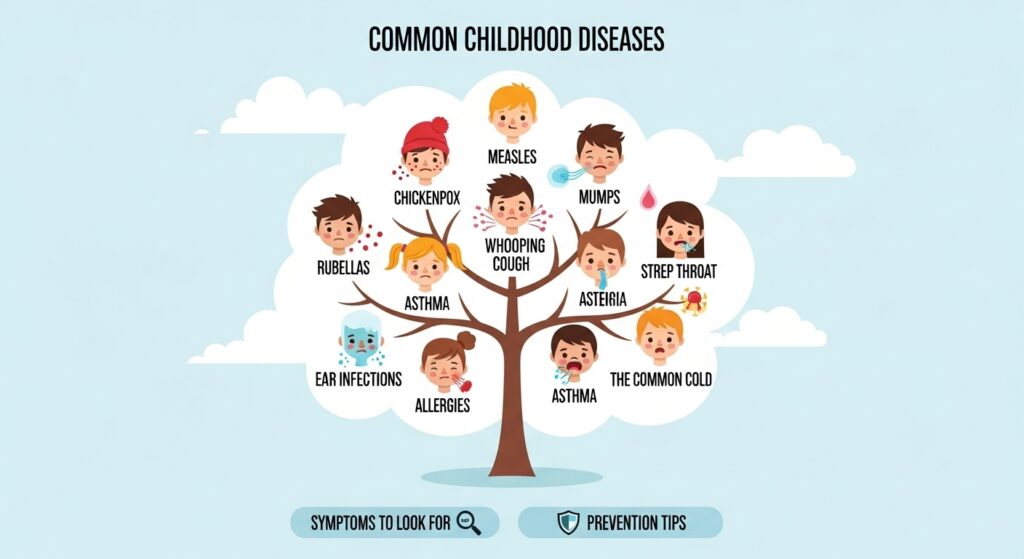
Children are more likely to develop infections because their immune systems are still learning to fight germs. Some of the most common diseases seen in children include:
1. Common Cold and Flu
The common cold is one of the most frequent illnesses in children. It is caused by viruses and spreads easily through coughing, sneezing, or close contact.
Common symptoms include:
➤ Runny or blocked nose
➤ Mild fever
➤ Cough and sore throat
➤ Fatigue and irritability
Most colds improve within a few days, but proper rest, fluids, and medical guidance help children recover comfortably.
2. Fever and Viral Infections in Child Health Care Guide
Fever is a common symptom that indicates the body is fighting an infection. Viral infections often cause fever along with body weakness and reduced appetite.
Parents should consult a doctor if:
➤ Fever lasts more than 2–3 days
➤ The child becomes very weak or dehydrated
➤ The temperature rises very high
Early medical attention helps avoid complications.
3. Diarrhea and Stomach Infections
Children can easily get stomach infections due to contaminated food or water. Diarrhea can lead to dehydration if not treated properly.
Symptoms include:
➤ Frequent loose stools
➤ Vomiting
➤ Stomach pain
➤ Weakness and dehydration
Ensuring clean food, safe drinking water, and proper hygiene can help prevent these infections.
4. Respiratory Infections
Respiratory infections such as bronchitis or pneumonia can affect children, especially during seasonal changes.
Symptoms may include:
➤ Persistent cough
➤ Difficulty breathing
➤ Fever
➤ Chest discomfort
Early treatment helps prevent complications and supports faster recovery.
5. Skin Infections
Children are active and often play outdoors, which can expose them to bacteria and fungi that cause skin infections.
Common skin issues include:
➤ Rashes
➤ Fungal infections
➤ Allergic reactions
➤ Minor wounds and infections
Maintaining proper hygiene and clean clothing helps prevent many skin-related problems.
Prevention Tips for Better Child Health
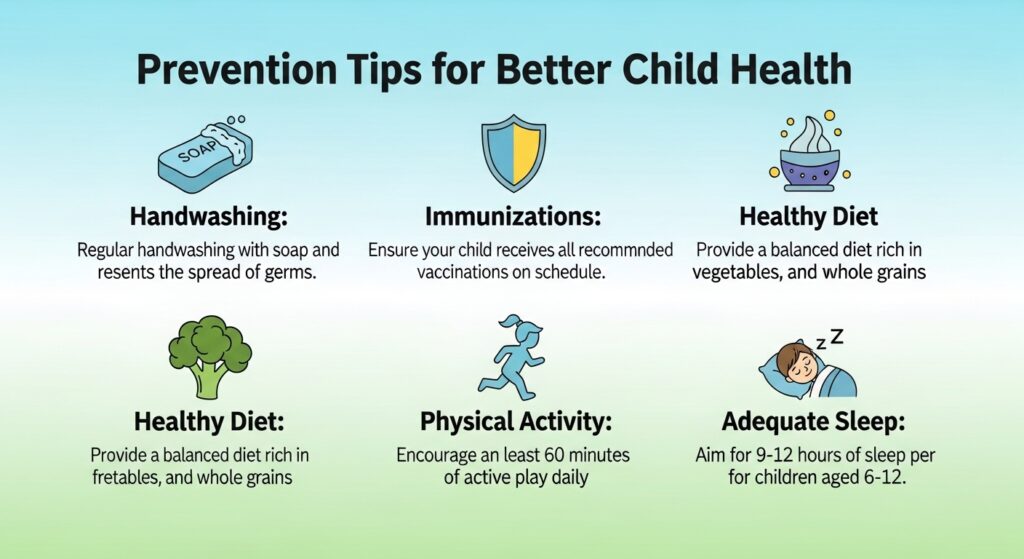
Preventing illness is always better than treating it. Parents can take several simple steps to protect their children from common diseases.
Ensure Timely Vaccinations
Vaccinations protect children from serious diseases such as measles, polio, and hepatitis. Following the recommended vaccination schedule is essential for building immunity.
Maintain Proper Nutrition
A balanced diet helps strengthen a child’s immune system. Healthy foods such as fruits, vegetables, whole grains, and proteins support growth and development.
Encourage Good Hygiene
Teaching children simple hygiene habits can greatly reduce infections.
➤ Washing hands before eating
➤ Keeping nails clean and trimmed
➤ Bathing regularly
These habits help prevent the spread of germs.
Promote Physical Activity
Outdoor play and physical activity help children stay active, build strong bones, and improve overall health.
Schedule Regular Health Checkups
Routine paediatric checkups help monitor a child’s growth, development, and overall health. Doctors can identify potential health issues early and guide parents on proper care.
When Should Parents Visit a Paediatrician for Child Health Care Guide?
Parents should seek medical advice if a child shows any unusual symptoms such as:
➤ Persistent fever
➤ Severe cough or breathing difficulty
➤ Continuous vomiting or diarrhea
➤ Poor appetite or weakness
➤ Delayed growth or development
Early medical consultation helps ensure the child receives the right treatment at the right time.
Expert Child Health Care Guide at Chetana Hospital
At Chetana Hospital, patient care is guided by experienced specialists such as Dr. Meghana Gaddikeri (MBBS, MS, DNB – Obstetrics & Gynaecology). She completed her graduation from Government Medical College, Aurangabad and has extensive experience in managing extremely high-risk pregnancies.
Dr. Meghana Gaddikeri is also skilled in instrumental deliveries and has a special interest in supporting mothers through Breastfeeding and PCOS care, ensuring both mother and child receive comprehensive medical attention.
Conclusion:Child Health Care Guide
Child health care plays a crucial role in ensuring a healthy future for every child. Understanding common childhood illnesses, maintaining proper hygiene, following vaccination schedules, and consulting doctors regularly can help protect children from many health problems.
If you are concerned about your child’s health or need professional medical guidance, consult experienced paediatric specialists for the right diagnosis and treatment. Early care and prevention are the best ways to support a child’s healthy growth and development.
Many modern treatments and medications used in general medicine are supported by trusted pharmaceutical companies such as
https://www.cipla.com/